13 Bedroom Ideas for Restless Minds

A peaceful bedroom can make a significant difference when your mind feels busy at the end of the day. The right design choices can help create a calming environment that encourages relaxation, reduces visual clutter, and promotes better sleep. Whether you struggle with overthinking, stress, or simply want a more tranquil retreat, these bedroom ideas can help transform your space into a sanctuary designed for rest and comfort.
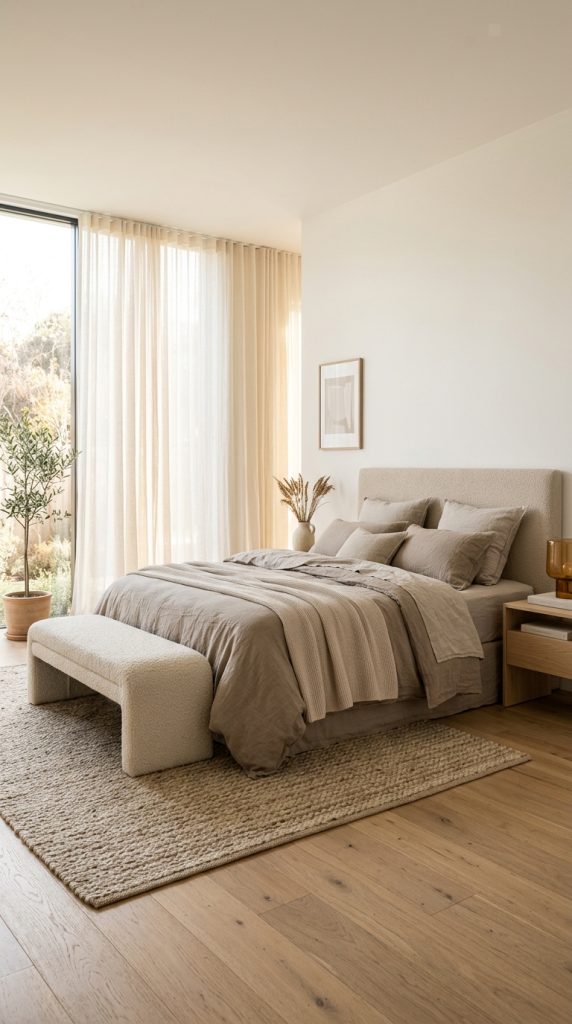
1. Choose a Soft Neutral Color Palette
A soft neutral color palette helps create a calm and balanced atmosphere. Shades like warm white, beige, taupe, soft gray, and muted greige reduce visual stimulation and make the room feel more relaxing. These colors reflect natural light beautifully and provide a soothing backdrop that encourages rest while making the bedroom feel larger and more peaceful.
2. Minimize Visual Clutter
A cluttered room can often contribute to a cluttered mind. Keep surfaces clear and organize belongings in baskets, drawers, and closed storage solutions. Limiting unnecessary decor creates a sense of order and calm. A simplified environment allows your brain to relax more easily and helps establish the bedroom as a dedicated space for rest rather than distraction.
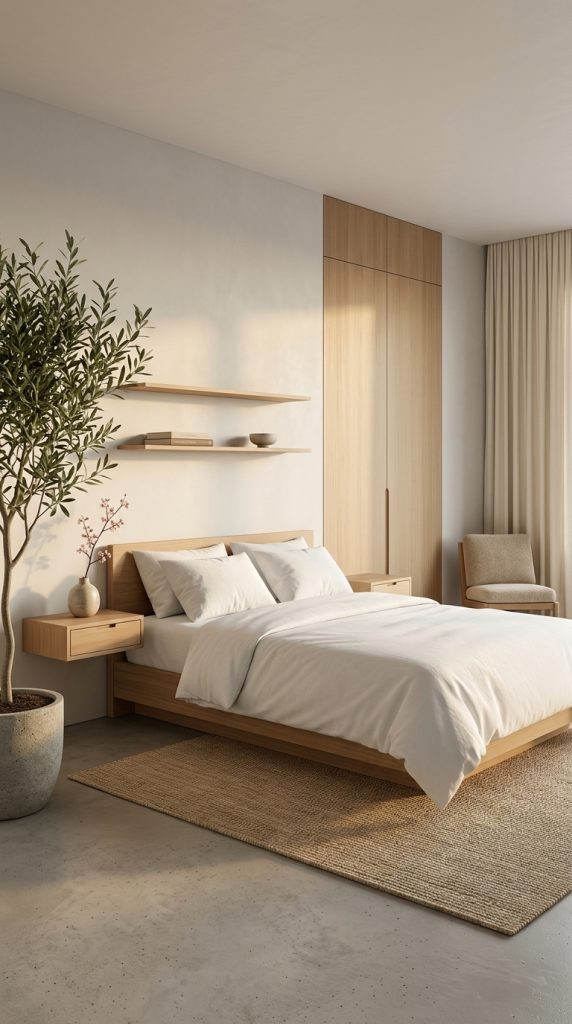
3. Layer Cozy Bedding
Comfort plays a major role in creating a restful bedroom. Invest in soft bedding, plush pillows, quilted blankets, and cozy throws that invite relaxation. Layering different textures adds warmth and visual comfort while making the bed feel luxurious. A welcoming bed often becomes the focal point of a calming sleep environment.

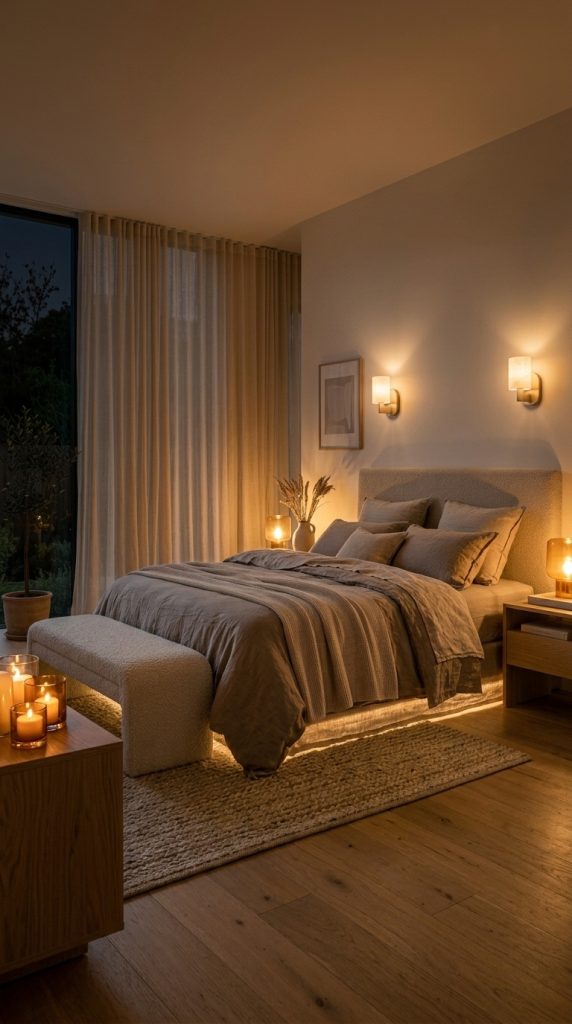
4. Incorporate Warm Ambient Lighting
Harsh overhead lighting can feel stimulating during the evening. Instead, use table lamps, wall sconces, and soft bedside lighting to create a gentle glow. Warm lighting helps signal to your body that it is time to unwind, creating a more peaceful atmosphere that supports relaxation and bedtime routines.
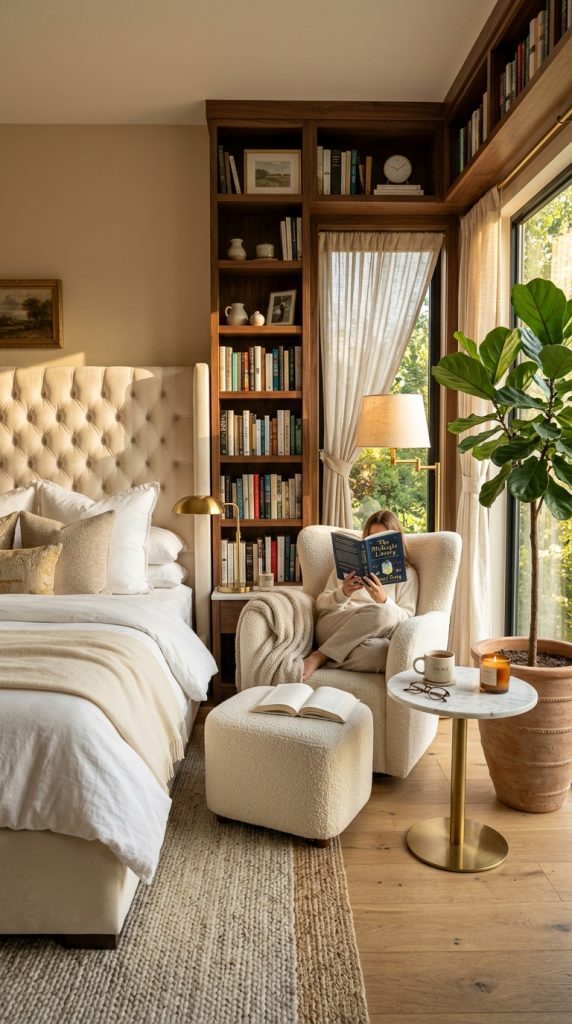
5. Create a Dedicated Reading Corner
A small reading nook can provide a healthy way to slow down before sleep. Add a comfortable chair, a soft blanket, and a warm lamp in an unused corner. Having a dedicated spot for reading encourages quiet activities that help transition your mind away from daily stress and screen time.
6. Use Blackout Curtains
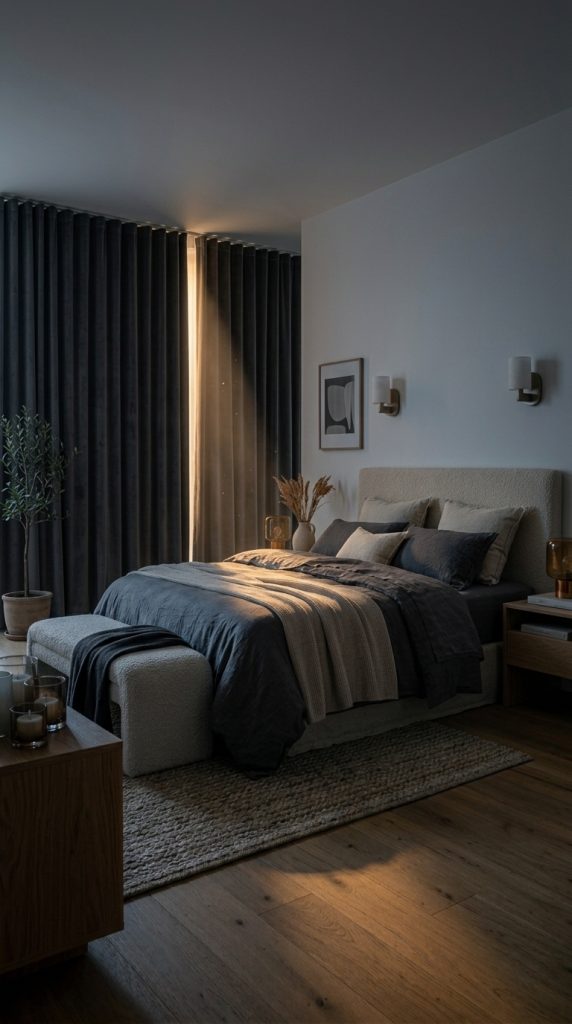
Quality sleep often starts with a dark and comfortable environment. Blackout curtains help block outside light, reduce distractions, and improve sleep quality. They also add softness and texture to the room while creating a cocoon-like atmosphere that feels secure and restful throughout the night.
7. Add Natural Materials
Natural materials such as wood, linen, cotton, rattan, and woven textures create a grounding effect within the bedroom. These organic elements add warmth and authenticity while helping the space feel connected to nature. Their timeless appeal promotes a relaxed environment that supports emotional well-being.

Also Read: Home Library Ideas Without Custom Built Ins
8. Keep Technology Out of Sight
Reducing visible technology can make a bedroom feel significantly calmer. Hide charging cords, minimize electronics, and avoid placing work-related devices near the bed whenever possible. A technology-light environment encourages mental separation between daily responsibilities and personal rest time.
9. Introduce Calming Artwork
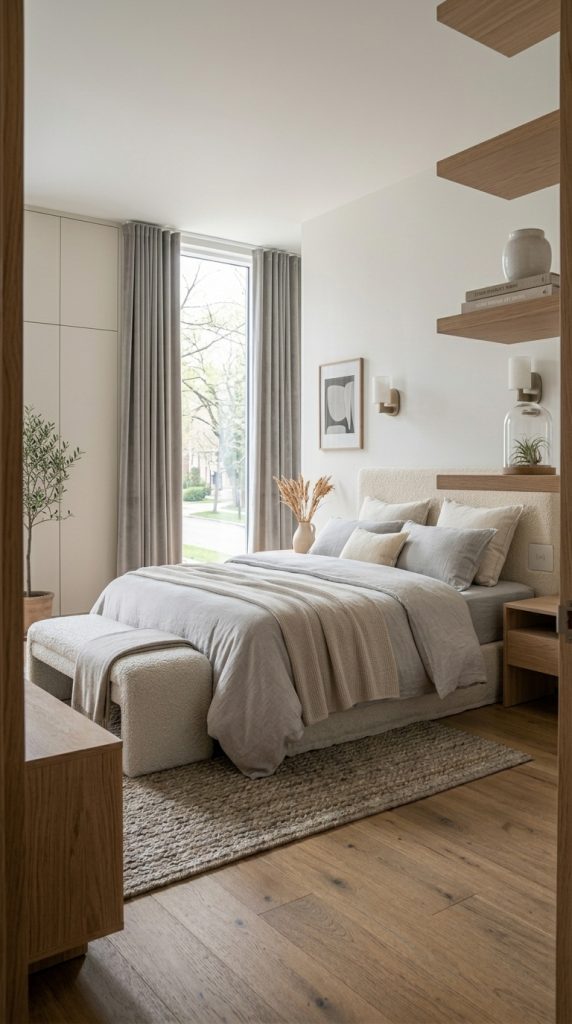
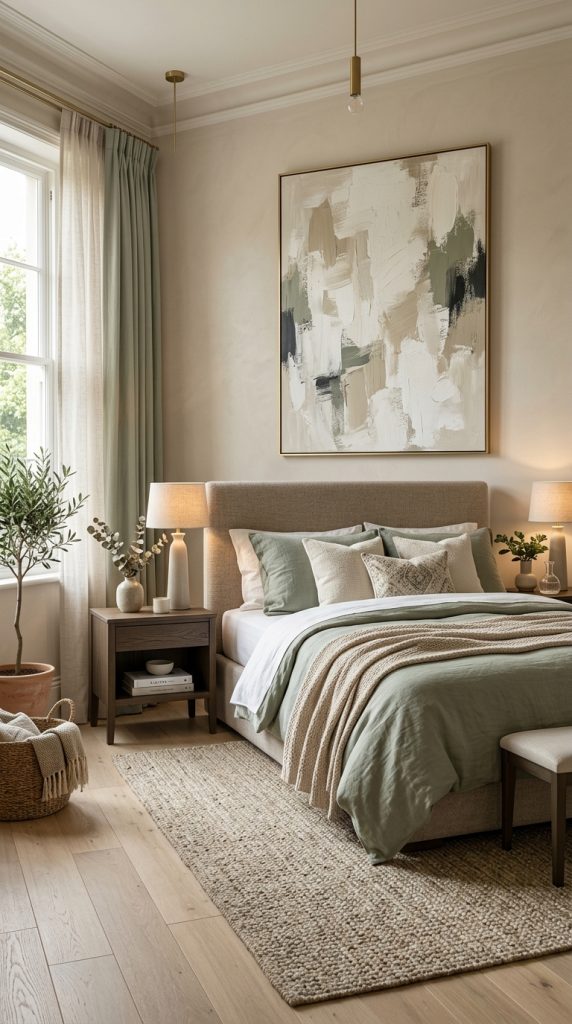
Choose minimalist artwork, nature photography, or soft abstract prints that promote relaxation rather than stimulation. Large-scale calming art can serve as a peaceful focal point while contributing to a balanced design. The goal is to create visual harmony that feels soothing and restorative.
10. Add a Soft Area Rug
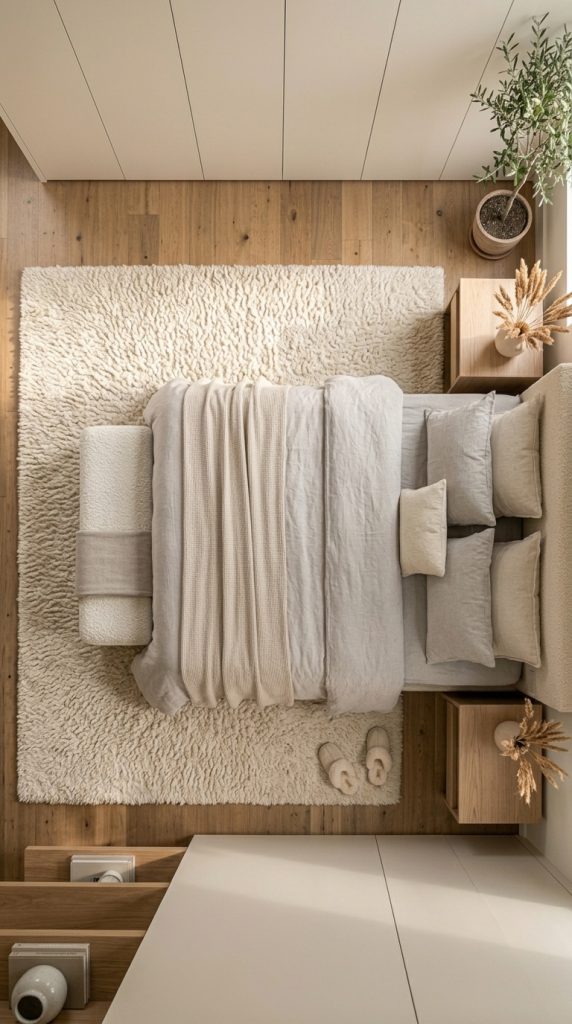
A plush area rug adds comfort underfoot while helping the room feel warmer and more inviting. Soft textures contribute to a sense of coziness and create a welcoming atmosphere from the moment you enter the room. Rugs also help absorb sound, making the space feel quieter and more serene.
Also Read: Fall Ideas That Transition Into Winter
11. Use Hidden Storage Solutions
Hidden storage keeps everyday items accessible without creating visual noise. Consider beds with storage drawers, nightstands with cabinets, and decorative baskets that conceal clutter. Maintaining an organized bedroom reduces distractions and helps create a cleaner, more peaceful environment for rest.

12. Incorporate Gentle Greenery
A few carefully chosen indoor plants can bring life and freshness into the bedroom. Greenery introduces natural color while creating a calming connection to the outdoors. Select low-maintenance plants that complement the room without overwhelming the space or requiring constant attention.
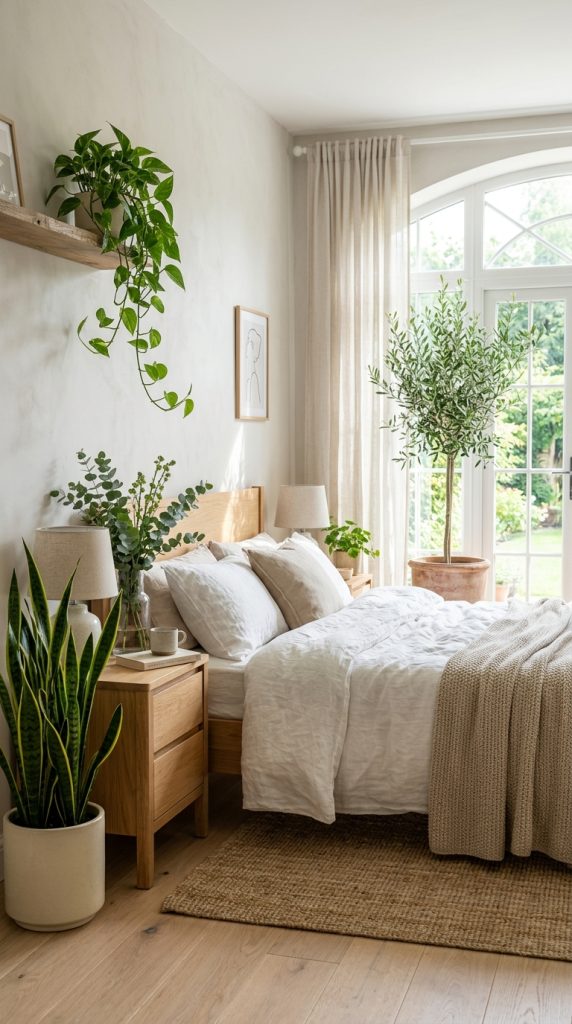
13. Design a Simple and Intentional Space
One of the most effective ways to support a restless mind is through intentional design. Focus on furniture and decor that serve a purpose while eliminating unnecessary distractions. A thoughtfully curated bedroom promotes a sense of balance, helping the mind settle more easily at the end of the day.
Final Verdict
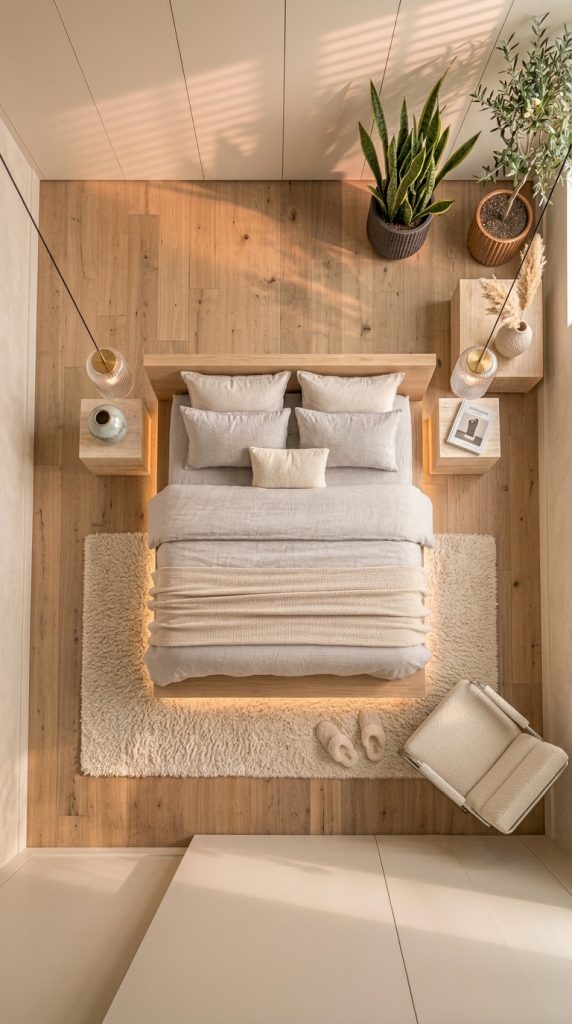
For restless minds, the most effective bedroom designs prioritize simplicity, comfort, organization, and calming sensory experiences. Soft colors, cozy textures, warm lighting, hidden storage, natural materials, and thoughtful decor choices can work together to create a space that encourages relaxation and better sleep. By focusing on comfort and reducing unnecessary distractions, you can transform your bedroom into a peaceful retreat designed to support rest, restoration, and overall well-being.