
14 Hexagon Tile Transition Floor Ideas

Hexagon tile transition floor ideas are a beautiful way to connect different flooring materials while creating a decorative feature that feels intentional rather than purely practical. Instead of using a straight line between tile and wood, a hexagon transition can create a soft, organic edge that adds personality and visual movement. From warm wood meeting patterned tile to dramatic black-and-white combinations, these hexagon tile floor transitions offer stylish inspiration for kitchens, entryways, bathrooms, dining areas, and open-concept American homes.
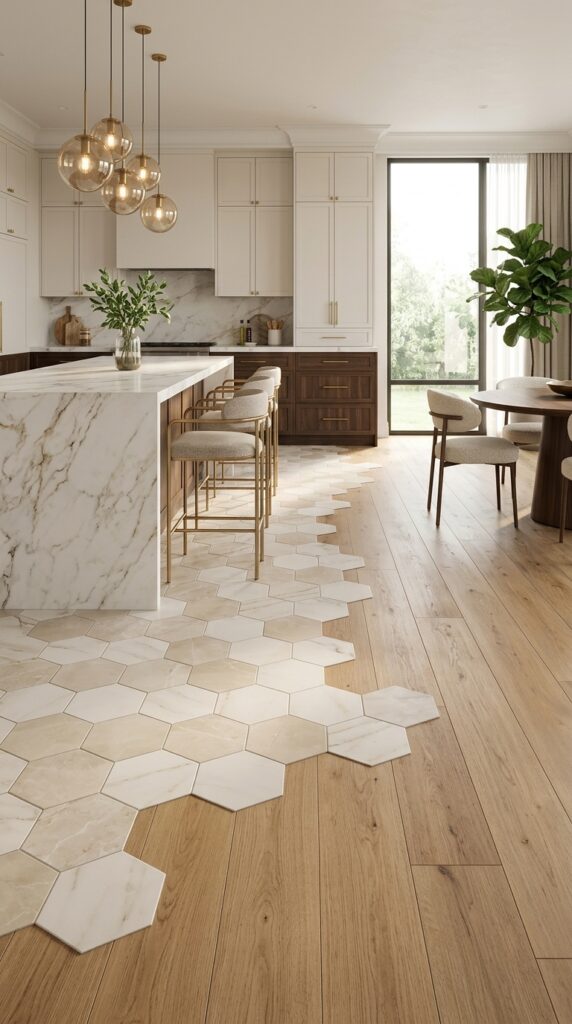
1. Hexagon Tile to Natural Wood Transition
A hexagon tile to natural wood transition creates a warm and sophisticated connection between two contrasting flooring materials. Use neutral hexagon tiles around the kitchen or entryway, allowing the individual shapes to gradually extend into the wood flooring for a more organic edge. Natural oak works especially well because its warm grain balances the structured geometry of the tile. This design feels custom and architectural while avoiding the abrupt straight line created by traditional flooring transitions. It works beautifully in open-concept kitchens and dining spaces.
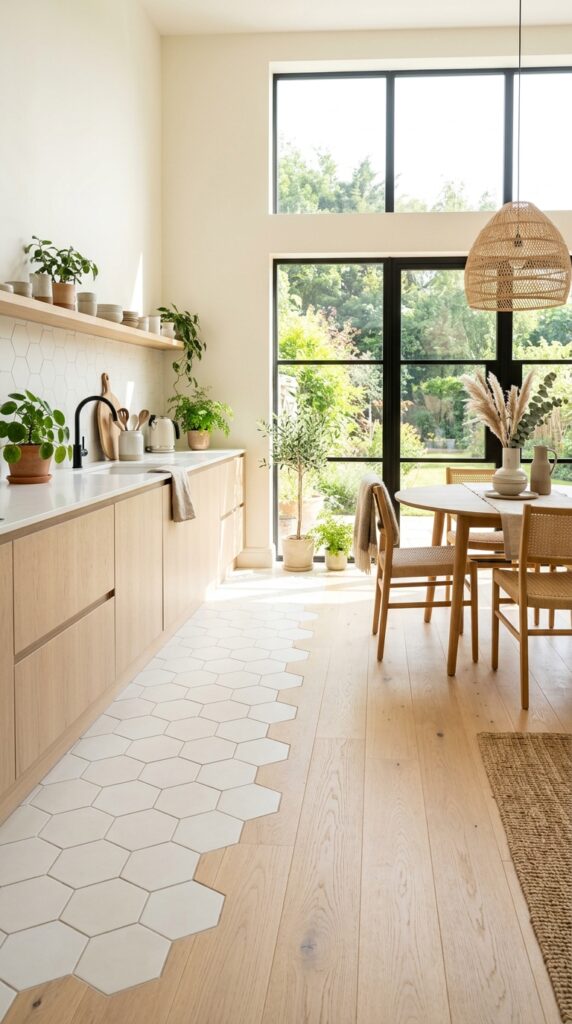
2. White Hexagon Tile With Light Oak Flooring
A white hexagon tile and light oak flooring combination creates a bright, airy transition that works beautifully in Scandinavian and modern interiors. Choose soft white or ivory hexagon tiles and pair them with pale oak planks for a seamless neutral palette. Allow several hexagons to gently overlap the edge of the wood flooring rather than creating a perfectly straight boundary. This technique adds visual interest while keeping the overall room feeling spacious, calm, and cohesive. Natural textures and simple furniture complete this sophisticated look.
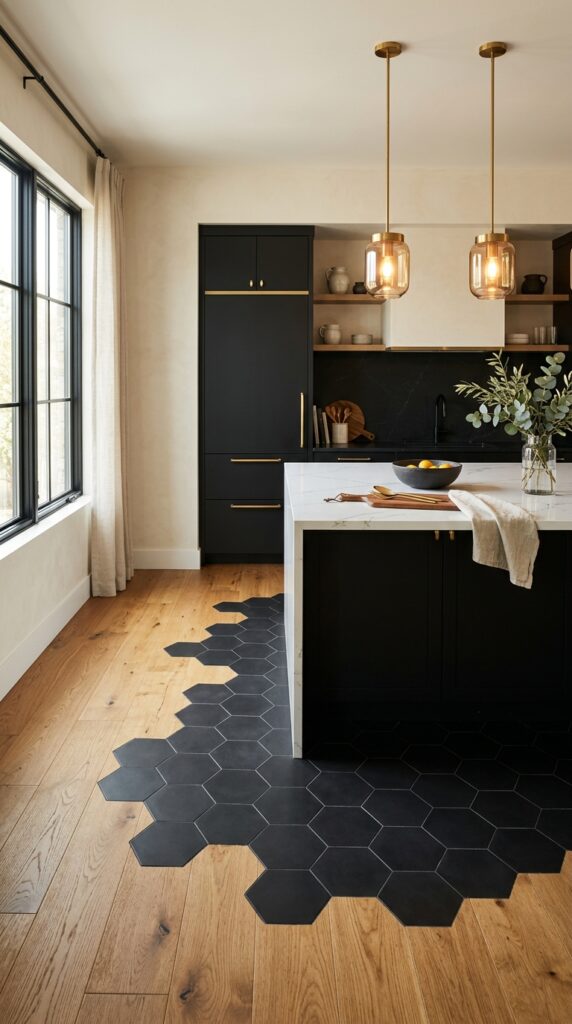
3. Black Hexagon Tile With Warm Wood
A black hexagon tile transition with warm wood flooring creates dramatic contrast while maintaining an elegant appearance. Matte black hexagons can define a kitchen work zone, mudroom, or entryway before gradually transitioning into honey oak or medium walnut flooring. The combination of dark geometric shapes and warm wood grain creates a sophisticated visual balance. Keep cabinetry and furniture relatively simple so the floor remains the focal point. This idea works particularly well in modern, industrial, transitional, and contemporary interiors.
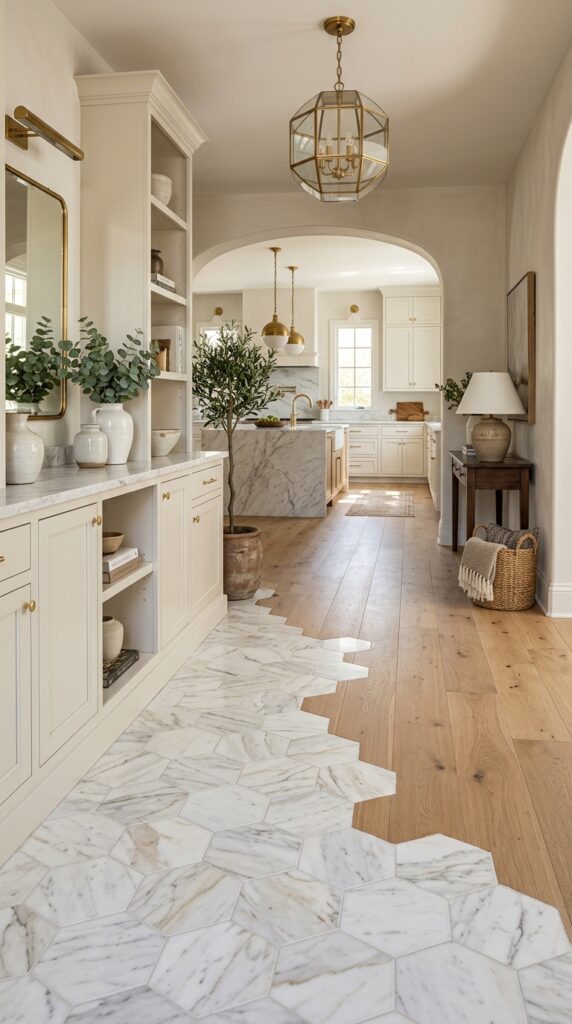
4. Marble Hexagon Tile Floor Transition
A marble hexagon tile floor transition adds an elevated and luxurious feeling to spaces where tile meets hardwood. Choose white, cream, or soft gray marble hexagons with subtle veining, then blend them into warm or neutral wood flooring using an irregular transition line. The natural stone pattern creates beautiful variation while the hexagonal shape keeps the design contemporary. This flooring idea is especially attractive in upscale kitchens, entryways, and open dining spaces where the transition can become an intentional architectural feature.
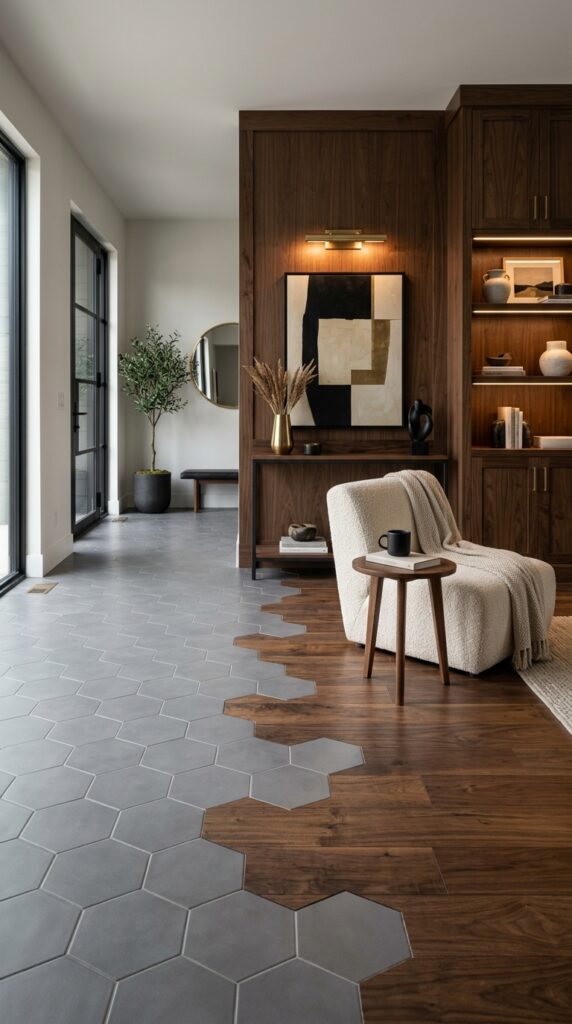
5. Gray Hexagon Tile With Walnut Flooring
A gray hexagon tile and walnut flooring transition offers a sophisticated combination of cool and warm tones. Medium gray hexagons provide a subtle modern foundation while deep walnut introduces richness and depth. Instead of separating the materials with a straight edge, arrange the hexagons so the transition gently moves into the wood. This creates a custom appearance that works especially well in contemporary homes. Add cream upholstery, brushed metal fixtures, and warm lighting to balance the darker flooring and create an inviting atmosphere.
Read More: 12 Penny Tile Floor Pattern Ideas
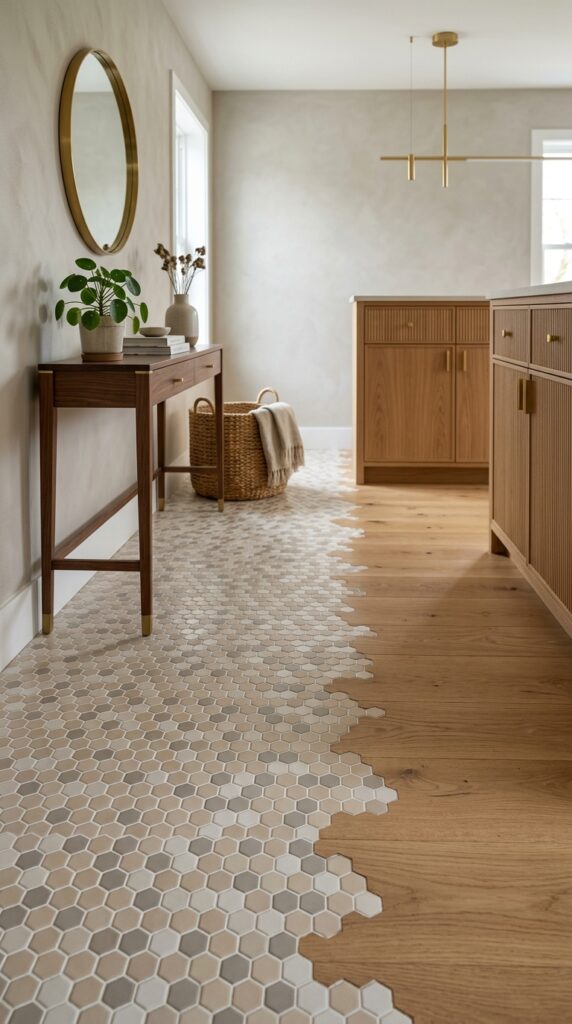
6. Small Hexagon Tile Transition
A small hexagon tile transition creates a delicate and detailed flooring feature that can work beautifully in compact spaces. Smaller hexagons allow for more flexibility when creating an irregular edge between tile and another flooring material. Use soft beige, white, charcoal, or muted gray tiles depending on your interior style. The smaller scale can make the transition feel intricate without dominating the room. This idea is particularly useful around kitchen islands, small entryways, bathrooms, and narrow spaces where a large tile pattern may feel overwhelming.
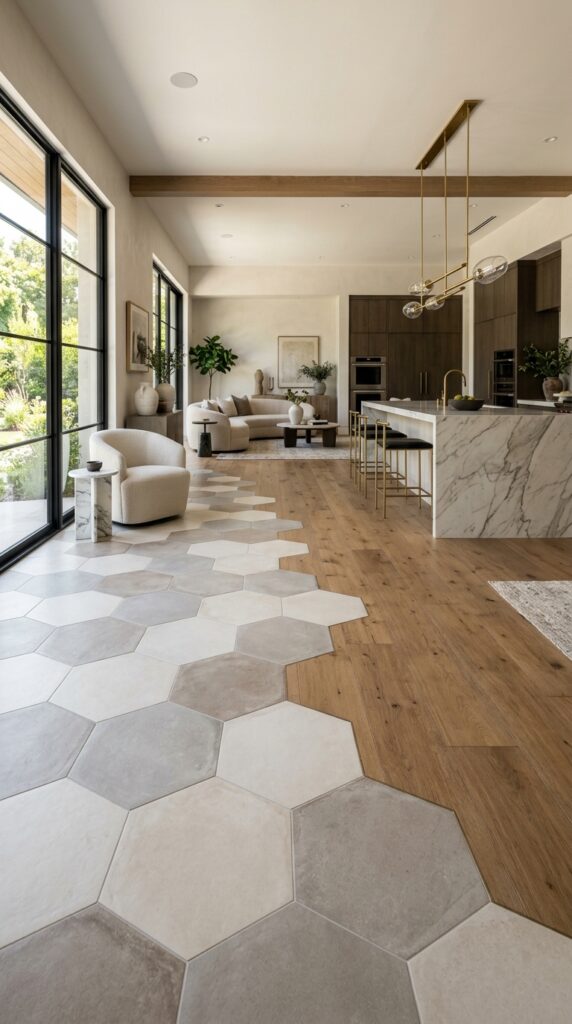
7. Large Hexagon Tile With Wood Flooring
A large hexagon tile transition creates a bold and contemporary look with fewer grout lines and a stronger geometric presence. Pair oversized hexagons with wide wood planks to create an interesting contrast between large-scale shapes and linear flooring. A soft neutral tile works beautifully with natural oak, while darker tile can create a more dramatic appearance with lighter wood. This approach is ideal for spacious kitchens and open-concept rooms where the flooring has enough visual space to showcase the oversized geometry.
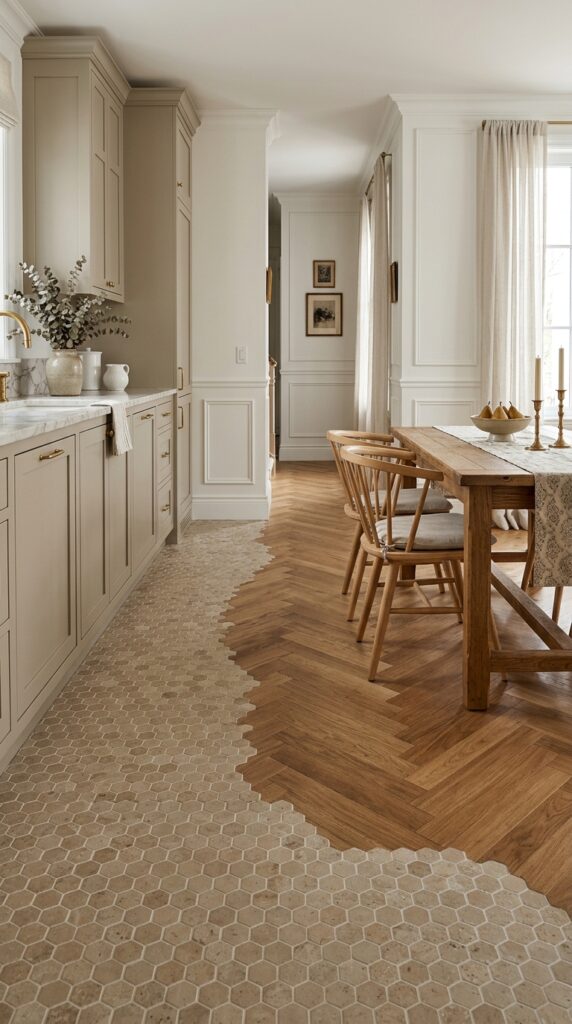
8. Hexagon Mosaic to Herringbone Wood
A hexagon mosaic to herringbone wood transition combines two decorative flooring patterns for an especially stylish result. Use small hexagonal tiles in the kitchen or entry area and transition into herringbone wood flooring through an irregular, organic edge. The combination creates layers of texture and pattern without needing additional decorative elements. Keep both flooring colors within a similar tonal family so the patterns complement rather than compete with one another. This idea is perfect for transitional, European-inspired, and character-filled interiors.
9. Terracotta Hexagon Tile With Oak Flooring
A terracotta hexagon tile and oak flooring transition brings warmth and character into the home. Terracotta tiles introduce earthy red, rust, and clay tones that pair beautifully with natural oak. Instead of creating a rigid dividing line, allow the hexagons to gradually scatter into the wood area for a handcrafted appearance. This combination works especially well in Mediterranean, Spanish-inspired, rustic, and warm modern interiors. Add woven textures, natural wood furniture, cream walls, and aged metal accents to enhance the relaxed architectural character.
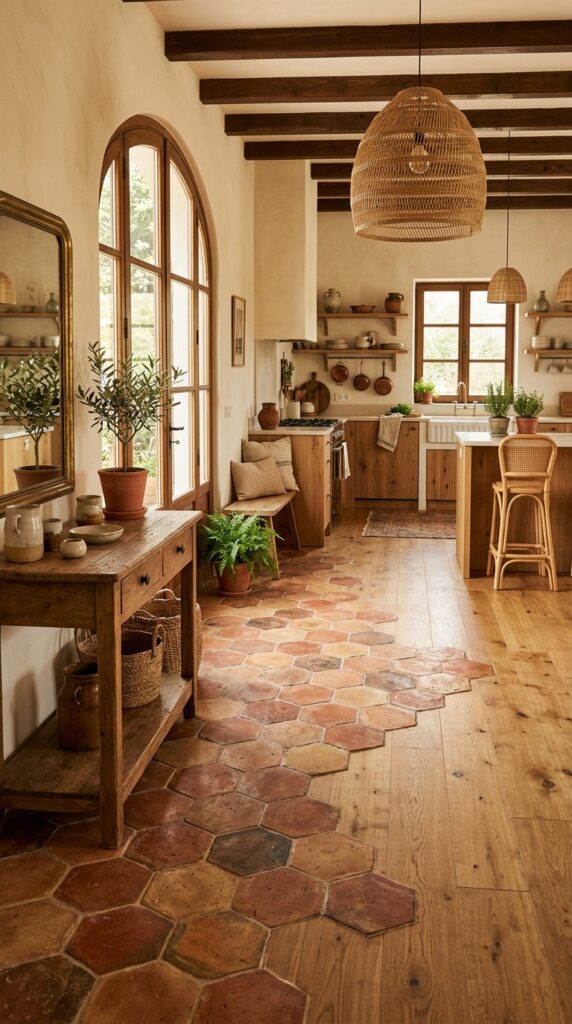
10. Geometric Hexagon Transition With Dark Flooring
A geometric hexagon transition with dark flooring creates a dramatic and sophisticated statement. Pair charcoal or deep gray hexagon tiles with dark wood or stained flooring for a tonal appearance that feels luxurious and contemporary. To prevent the room from becoming visually heavy, introduce lighter walls, natural fabrics, and warm lighting. The irregular boundary between materials adds an artistic quality while helping visually define different areas within an open floor plan. This style works especially well in modern kitchens, dining spaces, and sophisticated entryways.
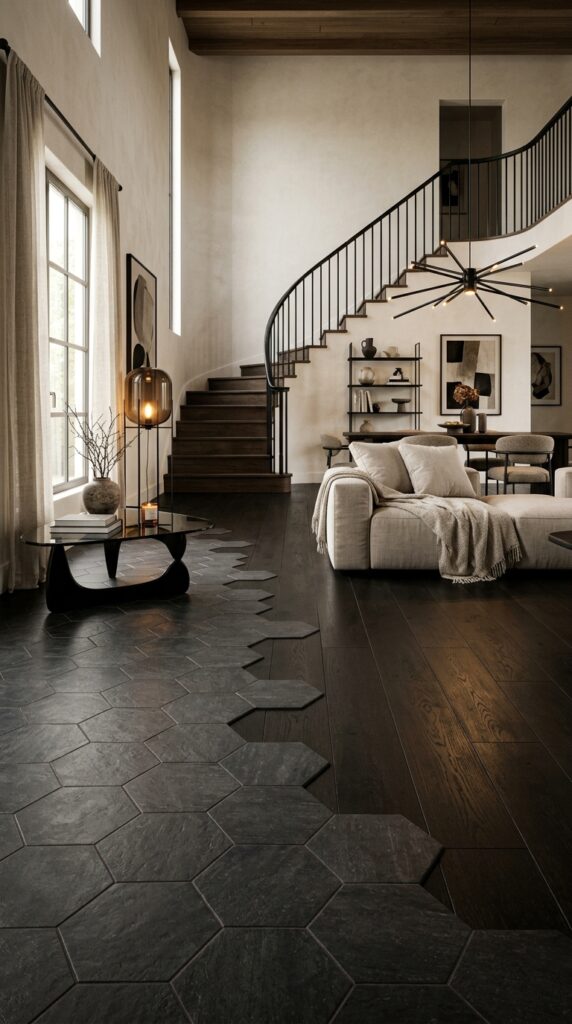
11. Hexagon Tile Kitchen to Living Room Transition
A hexagon tile kitchen to living room transition can beautifully define separate functional areas without completely closing off an open-concept floor plan. Use durable hexagon tile beneath the kitchen workspace and transition gradually into wood flooring as the room moves toward the living area. The organic edge visually connects both zones while maintaining their individual identities. Choose complementary colors, such as warm beige tile with natural oak, to keep the entire floor feeling cohesive. This approach is both practical and highly decorative.
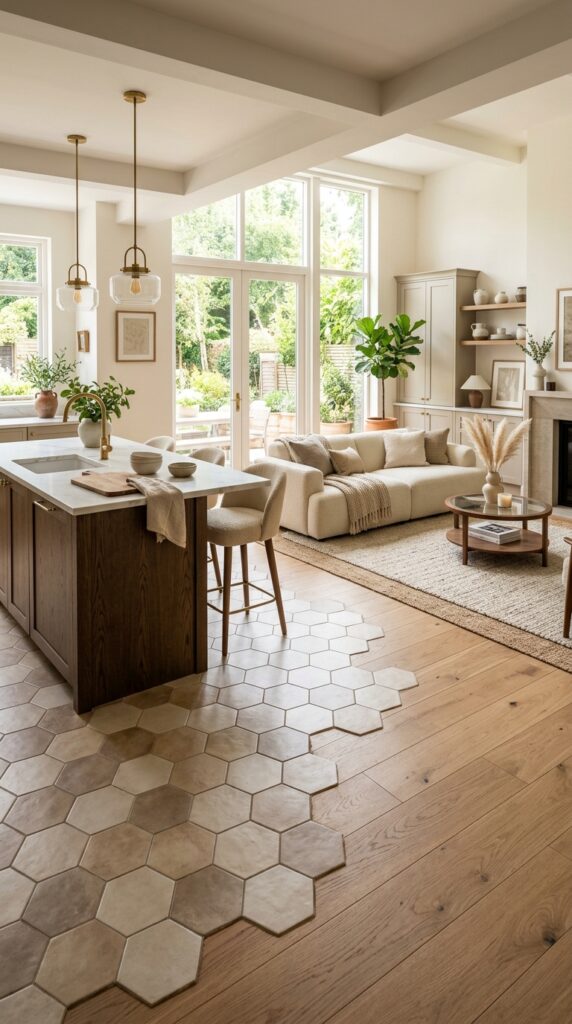
12. Neutral Hexagon and Blonde Wood Transition
A neutral hexagon and blonde wood transition creates a soft, sophisticated look that works beautifully with contemporary and Scandinavian interiors. Choose cream, warm white, pale beige, or light gray hexagons and pair them with blonde oak flooring. The subtle contrast allows the unusual transition shape to become the main design feature without making the room feel busy. Add minimalist furniture, natural textiles, soft lighting, and simple greenery for a calm interior that feels bright, welcoming, and thoughtfully designed.
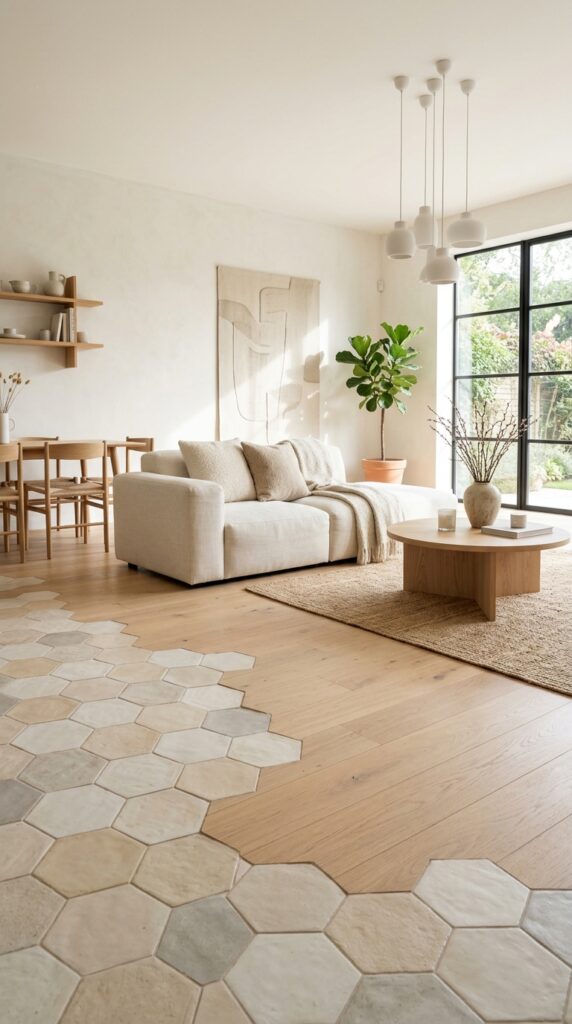
Read More: 10 Floating LED Candle Ceiling Ideas
13. Hexagon Tile Entryway to Hardwood
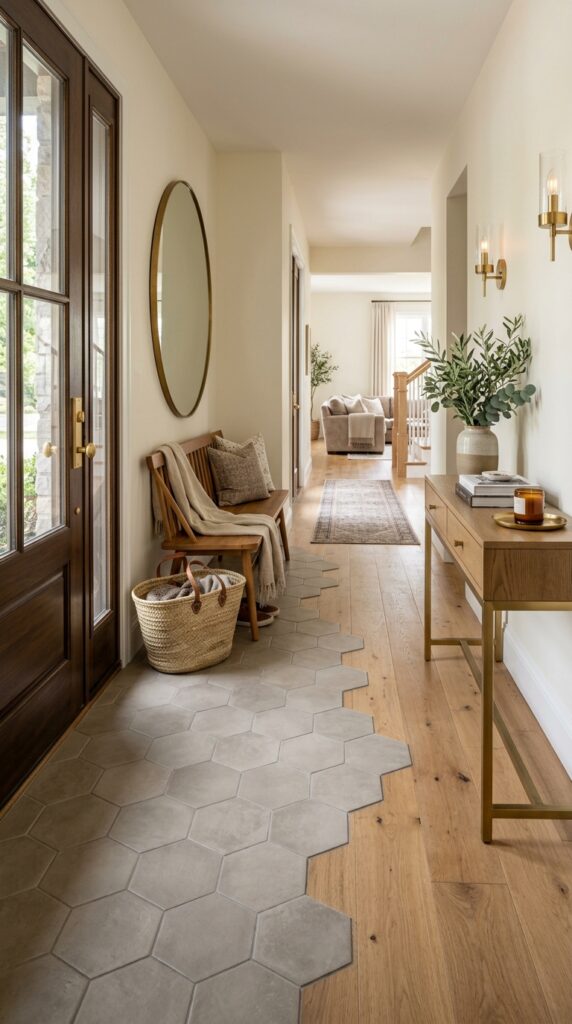
A hexagon tile entryway to hardwood transition is both attractive and practical for busy homes. Hexagon tile can create a durable zone near the front door where shoes and outdoor debris are more likely to collect, while hardwood continues into the main living area. An irregular transition line makes the change feel intentional and custom-designed. Choose durable matte tile in a neutral shade and pair it with warm wood for a timeless appearance. Add a simple bench, console, mirror, and woven basket to complete the welcoming entry.
14. Mixed-Color Hexagon Floor Transition
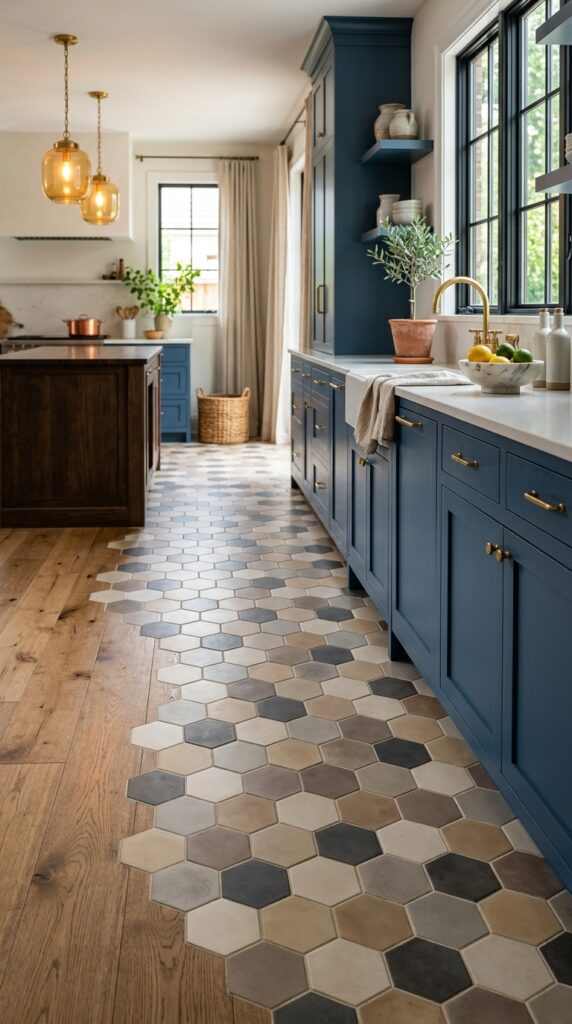
A mixed-color hexagon floor transition creates an artistic and personalized look by combining several complementary tile shades before blending into wood flooring. Try combinations such as cream, taupe, charcoal, and soft gray, or warmer shades like beige, terracotta, and brown. Keep the wood flooring relatively simple so the colorful tile remains the main feature. This design can transform a practical flooring connection into a statement detail, making it particularly appealing for creative kitchens, eclectic homes, renovated historic properties, and personality-filled interiors.
Final Verdict
Hexagon tile floor transitions offer a creative alternative to traditional straight flooring boundaries while adding character and architectural interest to your home. Whether you prefer soft white hexagons with light oak, dramatic black tile with warm wood, marble mosaics, terracotta designs, or mixed neutral patterns, the right combination can make two different flooring materials feel intentionally connected. Consider durability, color, scale, grout, and the direction of your existing flooring before installation. When carefully planned, a hexagon transition can become one of the most memorable details in your interior.


