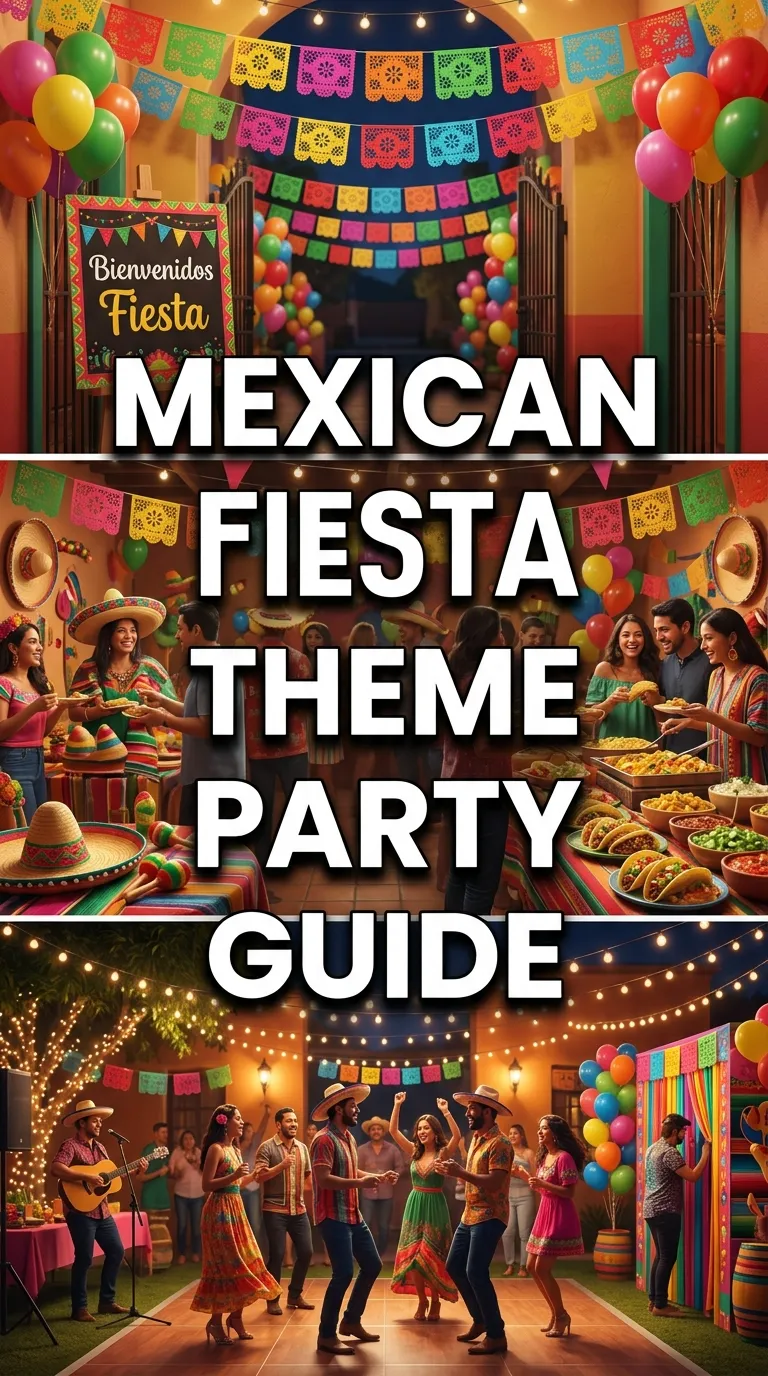
8 unique items thrown at Guelaguetza (You Won’t Believe #1)

The Guelaguetza is one of Mexico’s most vibrant and culturally rich celebrations, held every year in Oaxaca. While the festival is widely known for its traditional dances, colorful outfits, and regional pride, one unique tradition often surprises first-time viewers: performers throwing gifts into the crowd. At first glance, it may look like a playful gesture, but this act carries deep cultural meaning rooted in centuries-old indigenous practices. In this article, we will explore eight fascinating items thrown during the festival, what they symbolize, and why this tradition continues to matter today.
Hats and Accessories: A Personal Gesture
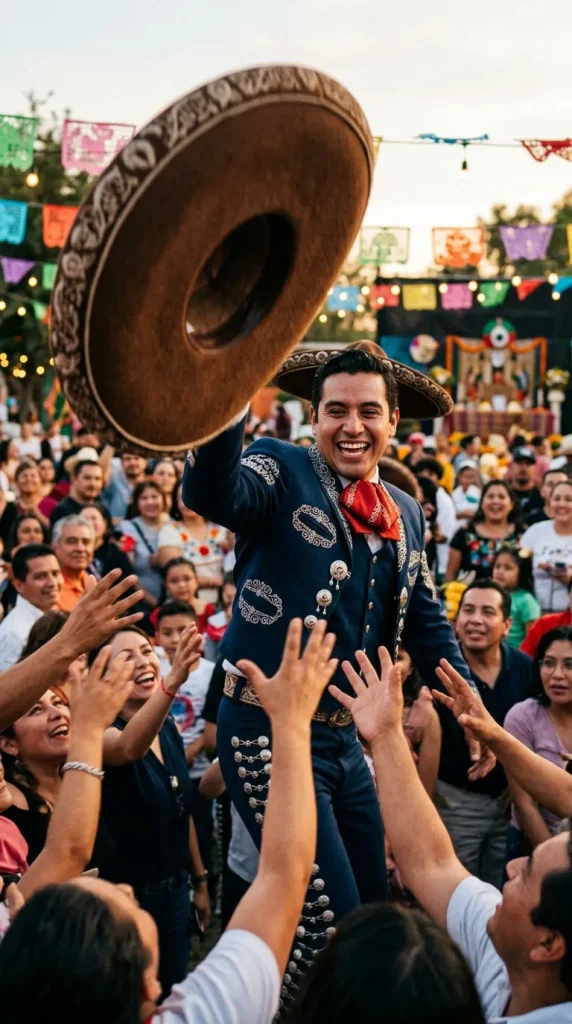
Occasionally, performers will throw items such as hats, scarves, or other costume accessories into the audience. These items are often part of traditional attire, making them especially meaningful. Sharing such personal elements creates a direct connection between performers and spectators, symbolizing respect, appreciation, and inclusion within the celebration.
Pineapples: The Most Iconic Festival Gift
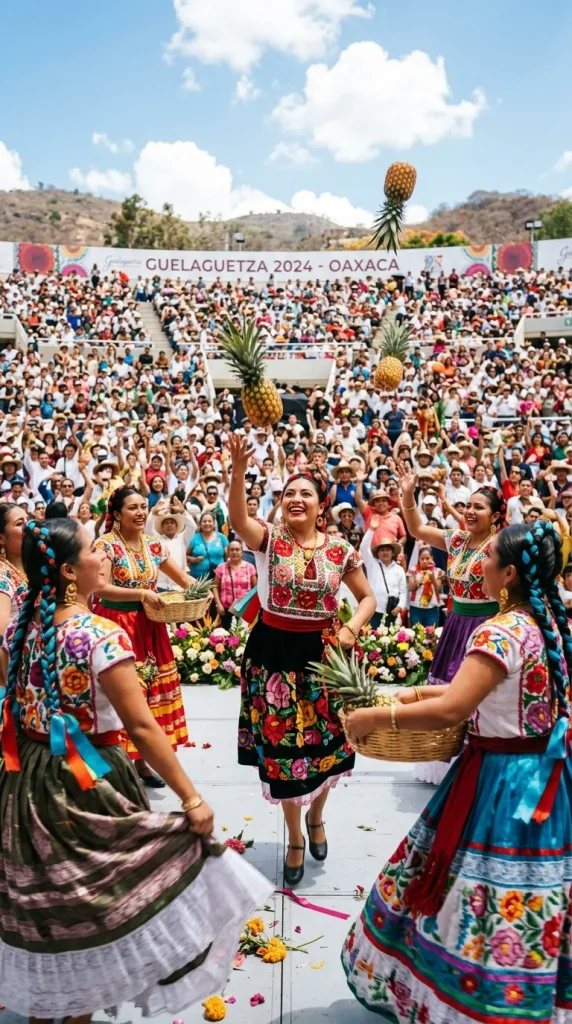
One of the most recognizable and unexpected items thrown during Guelaguetza is the pineapple. This tradition is closely tied to the famous “Flor de Piña” dance, where performers carry pineapples as part of their choreography. At the end of the performance, these pineapples are tossed into the audience, creating an exciting and memorable moment. Beyond the spectacle, pineapples symbolize hospitality, abundance, and a warm welcome, reflecting the generous spirit of the communities participating in the festival.
Oranges: A Symbol of Energy and Vitality
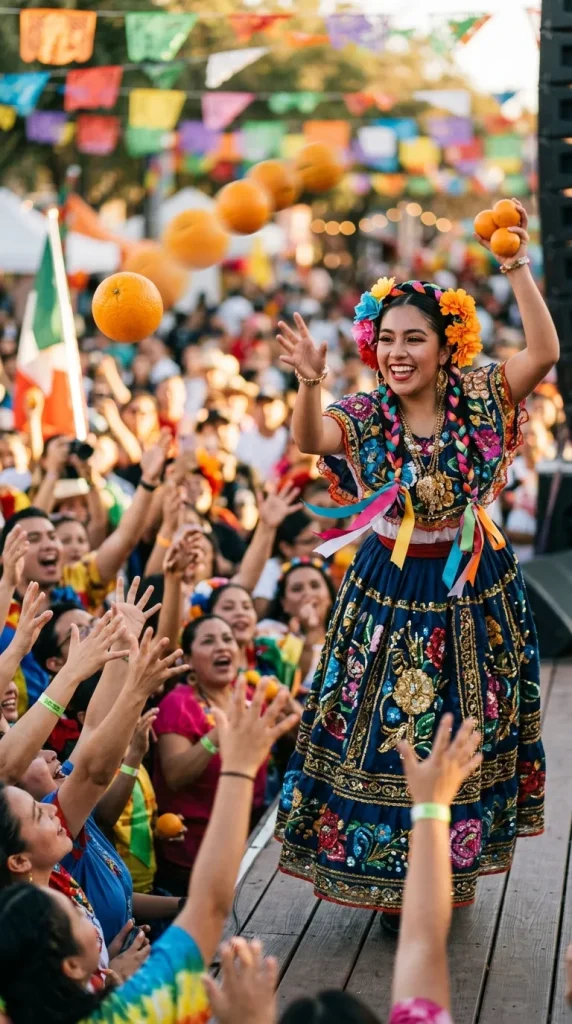
Oranges are another commonly thrown item during the celebrations. Their bright color and light weight make them easy to distribute across large crowds. More importantly, oranges represent energy, freshness, and positivity. By sharing them with the audience, performers extend a gesture of vitality and joy, reinforcing the lively atmosphere that defines the festival experience.
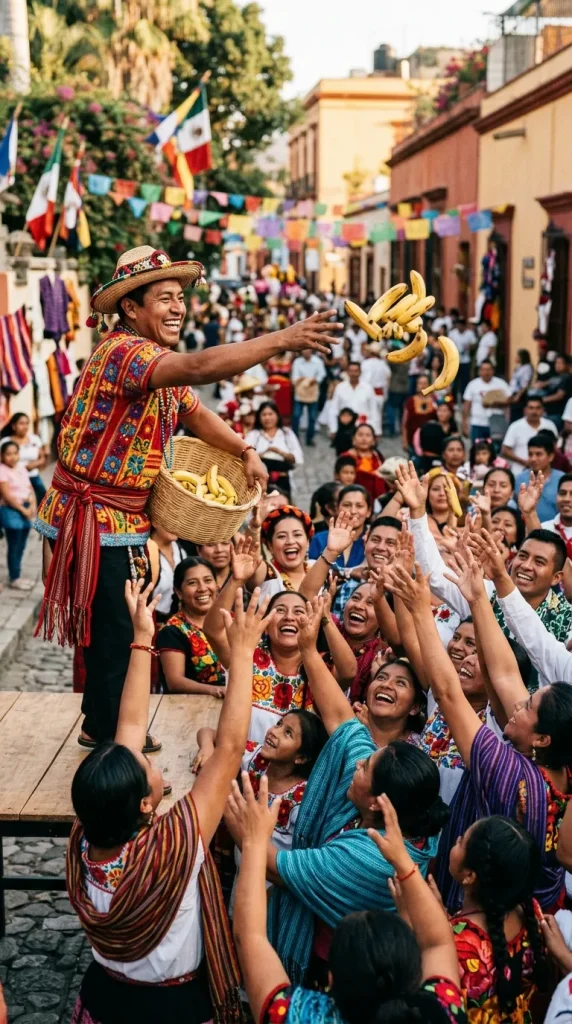
Bananas: Everyday Abundance Shared
Bananas may seem like a simple offering, but they carry meaningful symbolism within the context of the festival. As a staple fruit in many tropical regions, bananas represent everyday abundance and the connection between people and their natural environment. Throwing bananas into the crowd reflects the idea that even the most basic resources are worth sharing as part of community life.
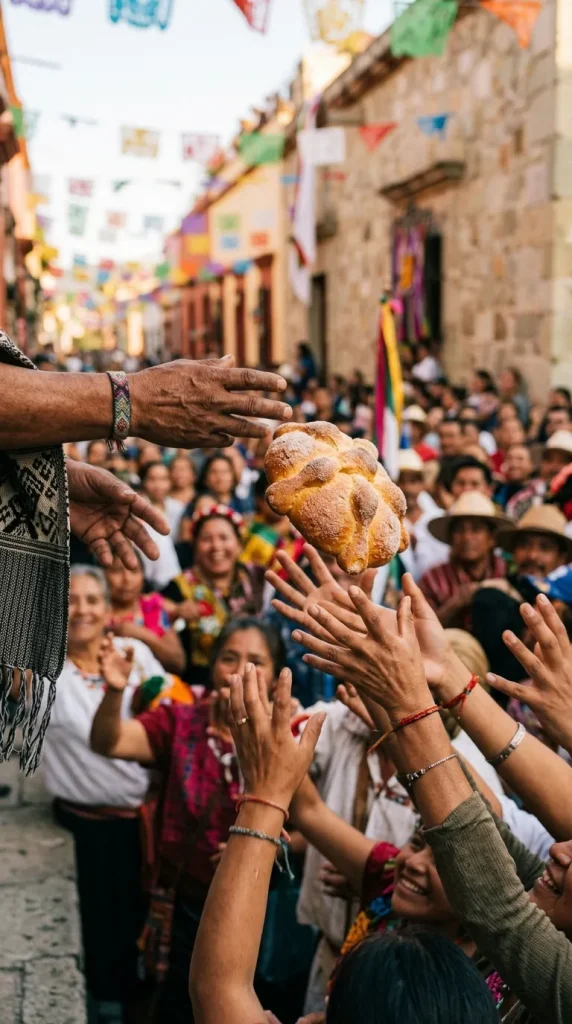
Traditional Bread: A Taste of Unity
Traditional bread, often referred to as “pan de fiesta,” is another item that performers distribute among spectators. Each region brings its own variation of bread, showcasing local flavors and baking traditions. This gesture symbolizes unity and togetherness, as bread has long been associated with shared meals and communal bonding. By offering it to the crowd, performers invite everyone to be part of a shared cultural experience.
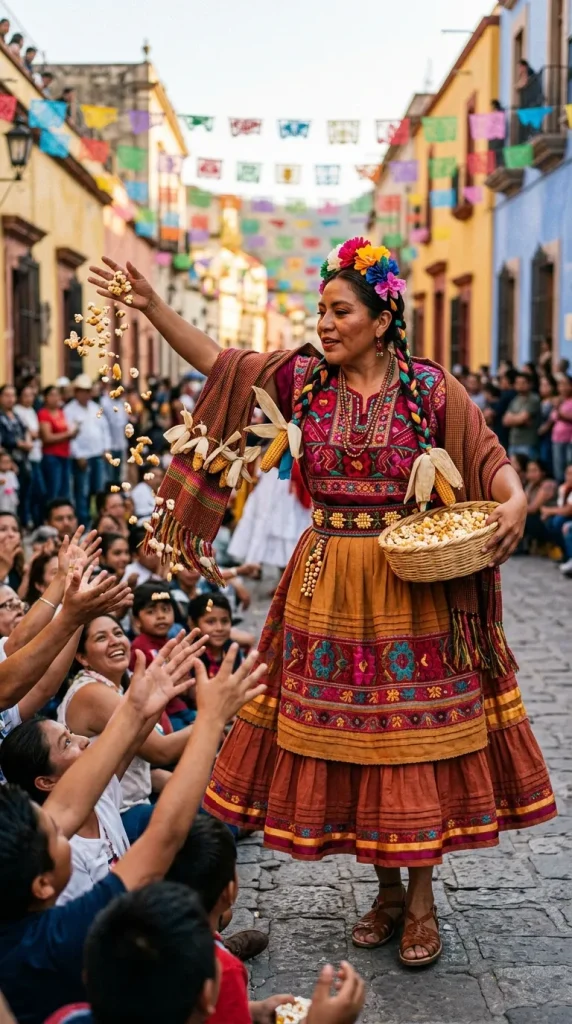
Corn-Based Foods: Honoring Indigenous Roots
Corn holds a central place in Mexican culture and history, making it a powerful symbol during Guelaguetza. Performers often throw corn-based snacks or products into the audience as a tribute to indigenous heritage. Corn represents survival, identity, and continuity, reminding both locals and visitors of the deep agricultural traditions that have shaped the region for generations.
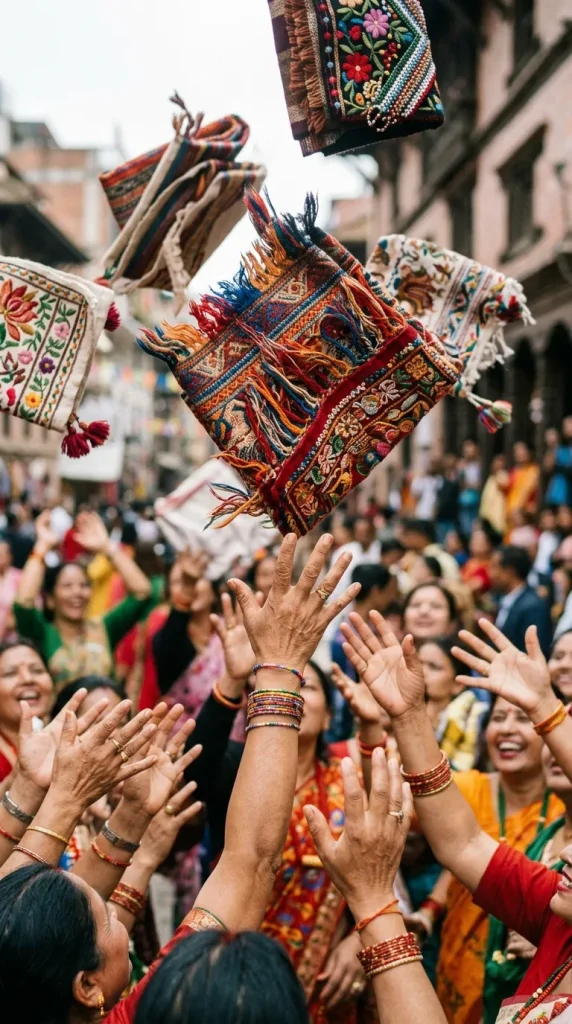
Handmade Crafts: Cultural Identity in Motion
In addition to food items, small handmade crafts are sometimes thrown into the crowd. These may include woven pieces, textiles, or miniature decorative items that reflect local artistry. Each craft carries the identity of its region, allowing audience members to take home a tangible piece of culture. This practice highlights the importance of craftsmanship and the pride communities take in preserving their artistic traditions.
Chocolate and Coffee: Flavors of Regional Pride
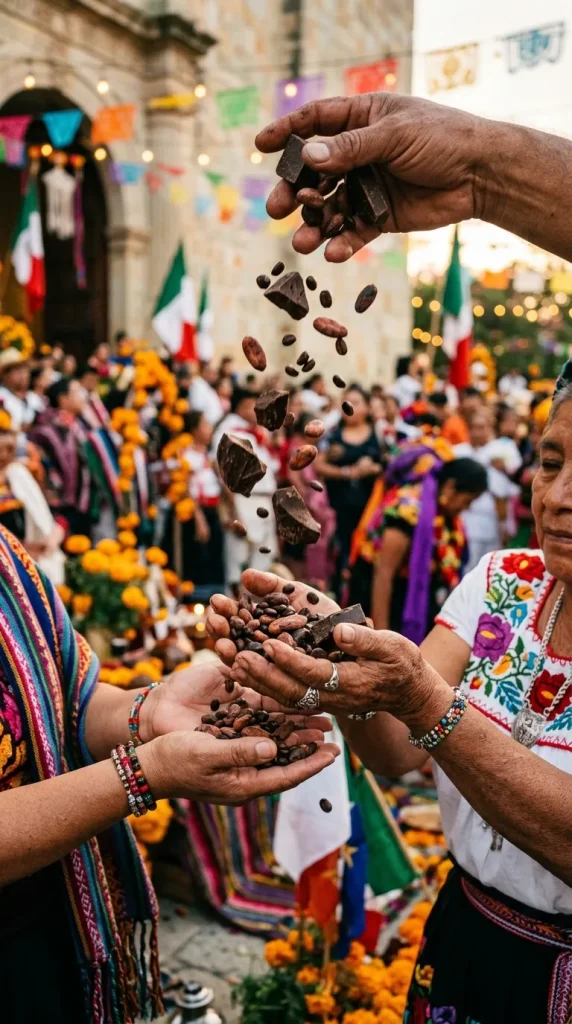
Chocolate and coffee are also popular items distributed during the festival, particularly because the Oaxaca region is known for both. Whether in the form of small treats or packaged goods, these items represent local pride and economic heritage. Sharing them with the audience reflects a sense of celebration and the sweetness of life, while also promoting regional specialties.
Why This Tradition Matters
The act of throwing gifts during Guelaguetza is not random or purely entertaining; it is deeply tied to the festival’s core philosophy. The word “Guelaguetza” itself refers to the concept of giving, sharing, and mutual support. This tradition originates from indigenous communities, particularly the Zapotec and Mixtec peoples, who practiced systems of cooperation where resources were shared without expectation of return. By continuing this custom today, the festival preserves an essential cultural value: that true celebration comes from generosity and community connection rather than individual gain.
Where Does This Happen?
These gift-throwing moments primarily take place at the main event venue in Oaxaca, often held in a large hilltop auditorium known for hosting the festival’s major performances. Thousands of spectators gather to watch dancers from different regions present their traditions. As performances conclude, the distribution of gifts creates a lively interaction between the stage and the audience, turning spectators into active participants in the celebration.
Final Thoughts
Guelaguetza stands out not only for its visual beauty but also for its powerful message. The tradition of throwing gifts into the crowd transforms the festival into a shared experience where generosity takes center stage. Each item, whether simple or symbolic, represents a deeper connection between people, culture, and history. For visitors, it is more than just an event to watch; it is an opportunity to witness and participate in a living tradition that celebrates the true meaning of giving.